Schema markup is a recent development in SEO. This new search engine optimization is one of the powerful but underutilized SEO techniques accessible today. Here in this blog, you will learn:
- What is Schema Markup?
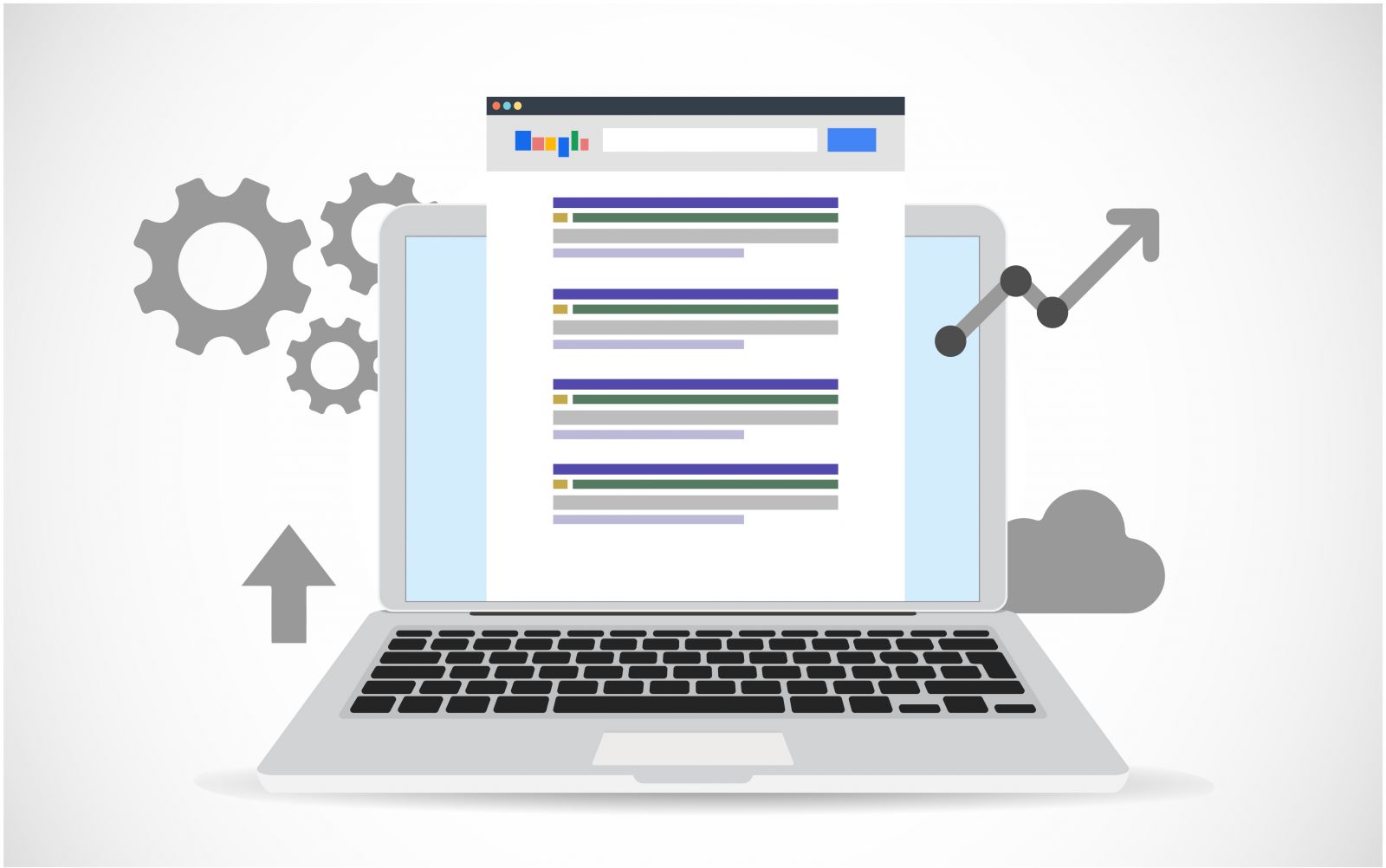
Schema markup is structured data (semantic vocabulary) that aids search engines in better understanding a website's information and serving richer results.
- Benefits of Schema Markup:
Experiment with Schema markup to see how the audience reacts to rich snippets' results for the best outcomes. The addition of Schema to a website aids search engines in determining what the site is about. The use of Schema markup can help with SEO. It's a strategy to make it easier for search engines to find and show content more engagingly, increasing their visibility.
Introduction to Schema
One of the newest evolutions in SEO is called schema markup. This new search engine optimization method is one of the most powerful but least-utilized forms of SEO available today.
However, once you grasp the concept and strategy of schema markup, you can boost your website on search engine result pages (SERPs).
What is Schema Markup?
Schema markup is structured data (semantic vocabulary) that helps search engines understand a website's info to serve rich results in a better way.
It allows search engines to see the meaning and associations behind entities mentioned on the website.
Example of how the Schema works
A hotel may have more than one phone number on its pages (reservations, restaurant, spa center, wedding coordinator).
By marking up the correct contact number, a search engine can know which information to serve a user and when.
Benefits of Schema Markup for SEO
These are some benefits from Schema markup and structured data:
1. Help Search Engines understand Website Content better:
Whether structured data affects rankings has been the subject of much debate and many experiments. As of now, there is no convincing evidence that this markup improves rankings.
But there are some indications that search results with more extensive rich snippets (produced using Schema) will have a better click-through rate.
For best results, experiment with Schema markup to see how the audience responds to the resulting rich snippets.
Adding Schema to the site helps search engines understand what the site is about. This reason is enough alone to use it. But that is just one of the benefits.
2. Improve Brand presence with a full Knowledge Graph:
Schema can provide an excellent boost for a brand's presence online. The Knowledge Graph is the big box on the right-hand side of Google desktop searches (or front and center mobile searches).
It has the most relevant business information customers require, like phone numbers, social accounts, reviews, etc. The issue is that many businesses don't have a fully fleshed-out knowledge graph if they have one at all.
Google will display knowledge graphs only if they are highly confident the information included is accurate and useful.
Make it easier for them to trust the company's information (and thus show a knowledge graph) by marking it up as structured data on the website.
This way, you can explicitly provide Google your preferred logo, hours of operation, website link, and more.
3. Get attention-grabbing Rich Results to increase CTR:
Maybe the #1 benefit people seek from Schema is rich results. Google is no longer ten plain blue links on a page. Search listings can now be impressive.
Rating stars for a Hotel, room pricing, amenities, and more are now possible to show right in search listings. To get these unique listings, add whatever relevant Schema you can to the page.
Relevant being the operative word (you don't want to have a spammy schema just because you can).
There are many possible schema types to add (currently, Google shows 30 rich results powered by Schema).
Rich results powered by Schema make organic search listings stand out, which, in turn, has been proved to increase CTR.
4. Position website for Voice Search, Alexa, and Google Assistant:
In emerging SEO trends, voice search is on the rise. With the increase of mobile devices and home speakers, it's clear why. Unfortunately, in voice search results, there is typically only one Result provided.
So getting to that top position on voice search is even more crucial than regular search.
Thankfully, several best practices that lead to featured snippets in frequent searches are the same for voice SEO. One of which is structured data.
So use Schema to increase the odds of surfacing as the #1 voice search. Also, there is a new speakable schema specifically for marking up site elements meant to be spoken and thus suitable for voice search results.
Online interactions are inherently not as trustworthy as dealing with people face to face. That is why social proof, positive signals from unbiased third parties, is broad.
We earlier mentioned that Google ratings and reviews could show up right in Knowledge Graph. In addition to that, one can mark up pages with rating and review information. Perhaps you ask readers to rate how helpful a post was.
You have an e-commerce presence that allows customers to leave reviews. This user-generated social proof content can be summarized in structured data and eventually included in Google search results.
A great way to stay ahead in the competition.
How can Hotel Websites benefit from Schema?
Schema can allow the search engine to recognize more info about the hotel, rooms, amenities, and more while informing potential future guests about reviews, upcoming events, and answering FAQs.
Here are the types of Schema you should be adding to the hotel website and how they can benefit click-through rate and overall organic performance.
1. Hotel Schema:
Hotel Schema should be essential to implement on every hotel website. It straight away lets search engines recognize that site is for a hotel.
At the same time, it also gives you a plethora of opportunities to provide the search engine with more information about hotels, such as an address, phone number, amenities, and more.
In addition, once you implement a hotel schema on the Hotel website, it may improve search results for search queries they think the landing page is relevant to or a high-quality result.
2. Hotel Room Schema:
Hotel Room Schema gives you an extra layer of exclusive hotel schema you can use to further inform search engines about the various hotel rooms you offer.
For example, you can generate different codes to implement on individual room types such as Luxury Suites, Family Rooms, Balcony Suites, Penthouse Suites, Twin Rooms, etc.
The benefit of this Schema is that it allows web pages to inform the search engine of the hotel's types of rooms.
Thus, it increases the chances of the search engine showing pages higher in the SERP search queries that are particularly searching for family rooms, penthouse suites, hotels with balcony suites, etc.
3. Star Rating Schema:
Star Rating is a small amount of code that you can generate and implement on a hotel website to increase CTR dramatically.
First, you need to find a Google My Business account and note the average star rating property and the number of reviews the property has received on Google My Business. Using these data sections, you can generate a star rating Schema, and soon after, it will appear in search results.
Conclusion
Schema markup can improve SEO. It is a way to make it easier for search engines to find and engagingly display pages, boosting their visibility.
We at INNsight are aware of SEO strategies to increase direct bookings. Our SEO and SEM professional team will ensure that your hotel website stays ahead of your competitors.
By submitting your email address, you confirm that you would like to receive
marketing emails from INNsight. In addition, you agree to the storing and processing your data by
INNsight as described in our privacy policy.
This website uses cookies to deliver our services and to show you relevant inventory, property details, and rates for
. By using our website, you acknowledge that you have read and understand our
Cookie Policy, Privacy Policy, and our Terms of Service.
Your use of 's services, including the booking of online reservations, is subject to these policies and terms.
These Cookies are strictly necessary to provide you with services available through our websites and to use some of its features, such as access to secure areas and to book accommodations.
Cookie Name: Apache
Description: Logging Visitor IP for legal / operational purposes
Party: First-party (INNsight)
Expiration: Session
Data Type: Session Identifier
Cookie Name: PHPSESSID
Description: Session data (login/application state)
Party: First-party (INNsight)
Expiration: Session
Data Type: Session Identifier
Performance and Functionality Cookies
Opt Out
Opt In
These Cookies are used to enhance the performance and functionality of our websites but are non-essential to their use. However, without these Cookies, certain functionality (like videos) may become unavailable.
Analytics and Customization Cookies
6
Opt Out
Opt In
These Cookies collect information that is used either in aggregate form to help us understand how our websites are being used or how effective our marketing campaigns are, or to help us customize our websites for you.
Cookie Name: _ga
Description: Google Analytics website stats
Party: Third-party (Google Analytics)
Expiration: Not specified
Data Type: Analytics identifier
Cookie Name: _gid
Description: Session data (login/application state)
These Cookies are used to make advertising messages more relevant to you. They perform functions like preventing the same ad from continuously reappearing, ensuring that ads are properly displayed for advertisers, and in some cases selecting advertisements that are based on your interests.
Cookie Name: IDE / DSID / 1P_JAR
Description: Google DoubleClick advertising
Party:Third-party (Google/DoubleClick)
Expiration: Not specified
Data Type: Advertising identifiers
Cookie Name: __sonar
Description: DoubleClick advertising/targeting
Party:Third-party (Google/DoubleClick)
Expiration: Not specified
Data Type: Advertising data
Social Network and Sharing Cookies
2
Opt Out
Opt In
These Cookies are used to enable you to share pages and content that you find interesting on our websites through third-party social networking and other websites. These Cookies may also be used for advertising purposes, too.
Cookies are small data files that are placed on your computer or mobile device when you visit a website. Cookies are widely used by website owners in order to make their websites work, or to work more efficiently, as well as to provide reporting information.
Cookies set by the website owner are called “first party cookies.” cookies set by parties other than the website owner are called “third party cookies.” Third party Cookies enable third party features or functionality to be provided on or through the website (e.g. like advertising, interactive content, analytics, etc….). The parties that set these third party Cookies can recognize your computer both when it visits the website in question and also when it visits certain other websites.
Why Do We Use Cookies?
We use first and third party Cookies for several reasons. Some Cookies are required for technical reasons in order for our websites to operate, and we refer to these as “strictly essential” or "strictly necessary” Cookies. Other Cookies also enable us to track and target the interests of our users to enhance the experience on our website. Third parties serve Cookies through our website for advertising, analytics, and other purposes.
The law states that we can store cookies on your device without prior consent for strictly essential or strictly necessary cookies. For all other types of cookies we need your permission. You can at any time accept, reject, or change the cookie settings on this website at any time by clicking on the cookie settings link.



.webp)

.webp)
.webp)
 Related Blogs